

Fragrance Free Policy
Why Fragrance-Free?
Being fragrance-free means arriving to the session with no fragrance on your body, hair, or clothes. Basically, any product you put on your body—or that comes into contact with your clothes—needs to be fragrance-free.
What Does "Fragrance-Free" Mean?
Being fragrance-free means arriving to the session with no fragrance on your body, hair, or clothes. Basically, any product you put on your body—or that comes into contact with your clothes—needs to be fragrance-free.
What Products Contain Fragrance?
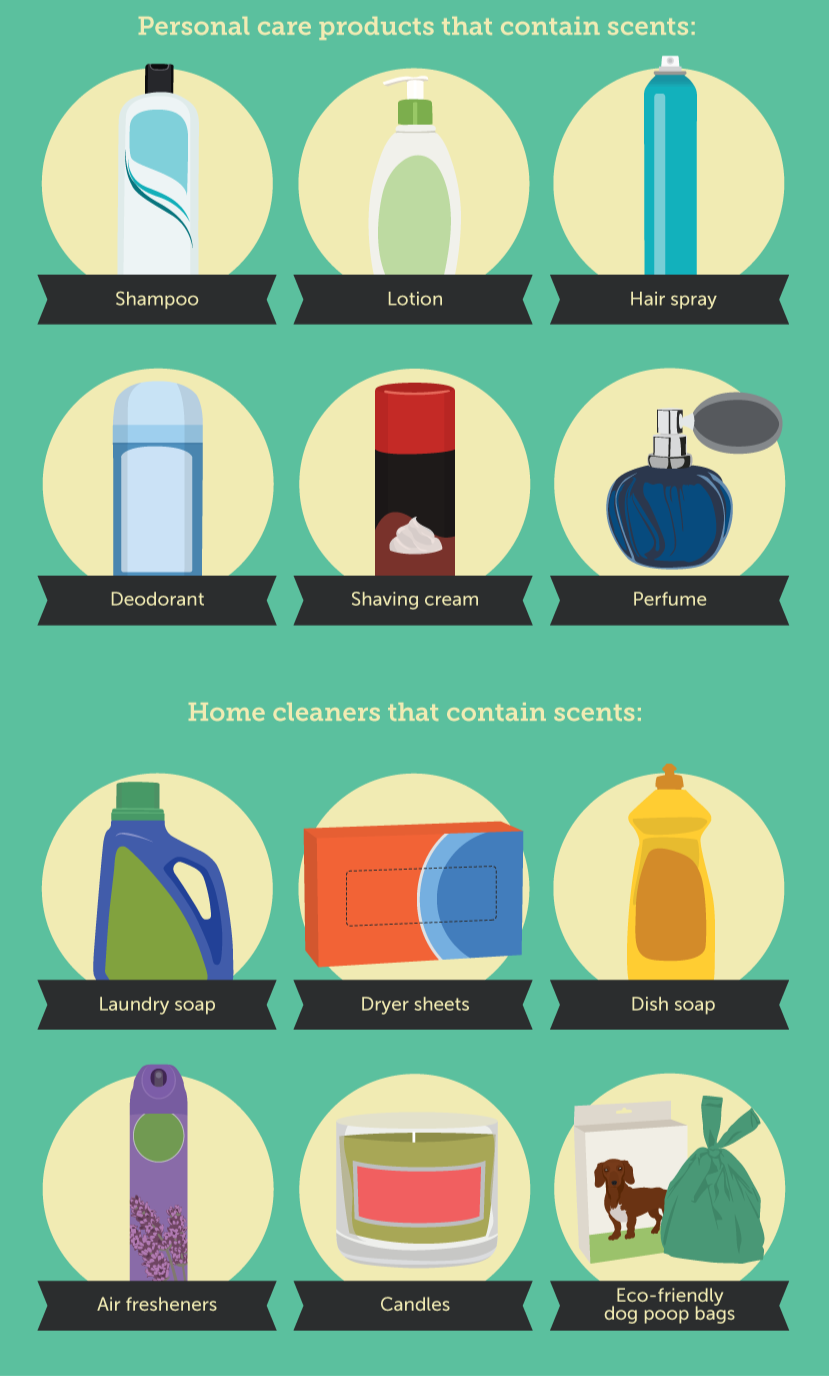
Any personal care product can contain fragrances, including:
Deodorant & antiperspirant
Laundry products: laundry detergent, dryer sheets, fabric softener, laundry enhancers
Hair products: shampoo, conditioner, styling gel, hair spray, leave-in conditioner, dry shampoo
Body wash and soap
Lotion (face, hand, or body)
Aftershave
Sunscreen
Insect repellent
Makeup
Perfume & cologne
Luckily, all of these products are available in fragrance-free varieties (except perfume/cologne, obviously), usually for a comparable price!
Two Options for Your Session
OPTION 1:
Go 100% Fragrance-Free
(Strongly Encouraged)
Make the switch from any fragranced personal care products you've been using to fragrance-free ones before your session. This is the best option for me and others who are negatively affected by fragrances.
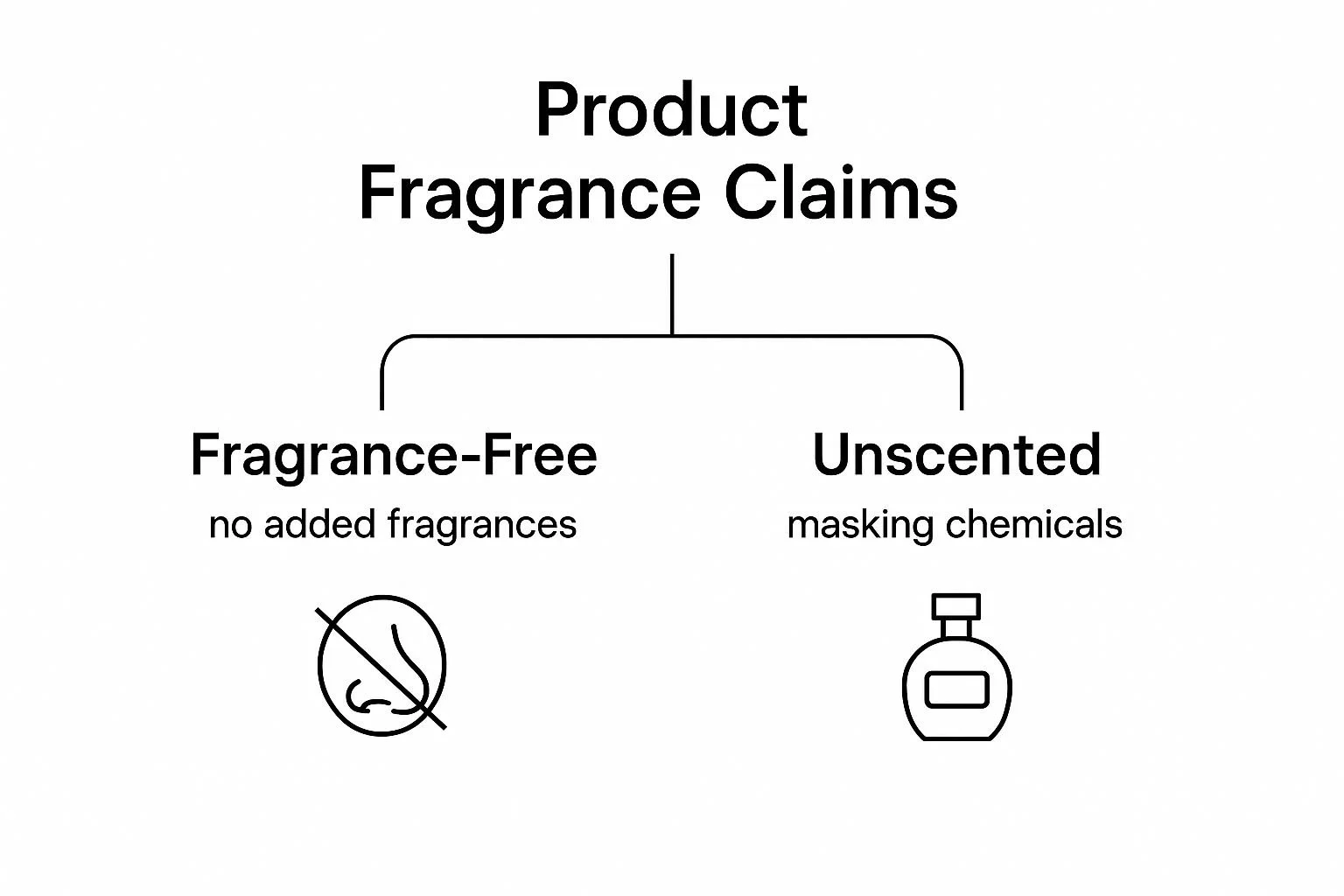
The best, and really only, way to be truly fragrance-free where you won't trigger reactions in people you cross paths with who have acute negative reactions to or health issues affected by fragrances, is to actually stop using any and all personal care and laundry products with chemical fragrances, and to continuously use fragrance-free products instead. (*Note: “unscented” does not necessarily mean fragrance-free, it can contain fragrance plus masking fragrance, so check the ingredients carefully.)
This is because the chemicals used in synthetic fragrances deeply penetrate surfaces, your body, and clothes. These residues of fragrances persist long after a product is used—ranging from hours to even months afterwards.
What to do with your old chemically fragranced products? You can donate them to the Redistro space in Greenfield, a free store open Sundays 11am - 2pm and Mondays 5pm -8pm, or give them away on Freecycle on Facebook or in PV Curb groups on Signal. I’m happy to assist in making sure they don’t go to waste if that would make it easier for you!
OPTION 2:
Trial Approach — Come as Fragrance-Free as Possible
If you are not yet able to switch to 100% fragrance-free products, you are welcome to try this approach to see if it works for you — but please know that switching permanently is strongly encouraged and is the only guaranteed way to prevent reactions.
Prior to the session, wash off previously applied chemically fragranced products with fragrance-free soap and water (or a DIY alternative—see below), and refrain from using any synthetically fragranced personal care products before coming to the session.
Clothes: Choose your outfit in advance. Wash it with fragrance-free detergent, or white vinegar or baking soda (choose just one—baking soda and vinegar combined cancel each other out) in place of detergent, and then dry it without dryer sheets. Ideally, hang it up to dry and air out for a day or two.
Please know: Residues from fragranced products—especially laundry detergent, deodorant, lotions, shampoo and conditioner, and perfumes/colognes—often linger on skin, hair and clothes. If you are continuing to use fragranced products between sessions, this approach may need to be readjusted for subsequent sessions.
If I can still detect fragrance, I'll let you know and we can discuss options for subsequent sessions. If it's possible to pinpoint which product's residue is there, and you're open to switching that particular product to a fragrance-free version, that would be the surest solution.
If this approach works and I cannot detect any fragrance at your session, you are welcome to continue using this method for future sessions.
Fragrance-Free Checklist
| Category | What You Need |
|---|---|
| ☐ Shampoo / Conditioner | Fragrance-free - or skip entirely on session day |
| ☐ Hair Products | Fragrance-free - or skip entirely on session day |
| ☐ Body wash / Soap | Fragrance-free — or use a DIY alternative (see below) |
| ☐ Deodorant / Antiperspirant | Fragrance-free, DIY coconut oil, or none |
| ☐ Perfume / Cologne / Fragrance Oils | Not Permitted |
| ☐ Sunscreen | Fragrance-free - or skip entirely on session day |
| ☐ Insect Repellant | Fragrance-free - or skip entirely on session day |
| ☐ Aftershave | Fragrance-free - or skip entirely on session day |
| ☐ Laundry Detergent | Fragrance-free - or look for "Free & Clear" label |
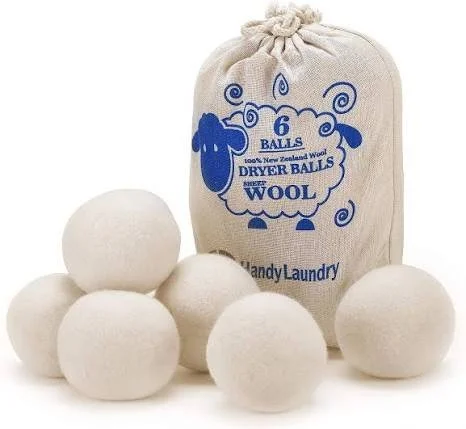
| ☐ Laundry products (dryer sheets, fabric softener) | Not permitted — use wool dryer balls instead |
| ☐ Laundry boosters (Oxiclean, etc.) | Fragrance-free only |
Please wear clothes that were washed in fragrance-free detergent without fabric softener, have not been dried with scented dryer sheets, and have not come into contact with any fragranced personal care products.
Note: Even products with no noticeable aroma to you can contain these chemicals. Even if you use just one product that is not fragrance-free, it will be detectable by and impact those of us who have health issues affected by fragrances.
If you are unsure about a product you use, or if you are unable to secure fragrance-free items for your appointment, please contact me before your session. We can discuss it!
For each product, ask yourself:"Is this explicitly labeled 'fragrance-free'?"*
If the answer is no, you have two options:
1) Switch permanently to a fragrance-free version of that product (strongly encouraged)
2) Skip that product entirely on the day of your session (after showering with fragrance-free soap or a DIY alternative) — this is a trial approach and may not work
*Note: The label “unscented” does not necessarily mean fragrance-free, it can contain fragrance plus masking fragrance, so check the ingredients carefully.
How to Tell if Products Are Fragrance-Free or Not
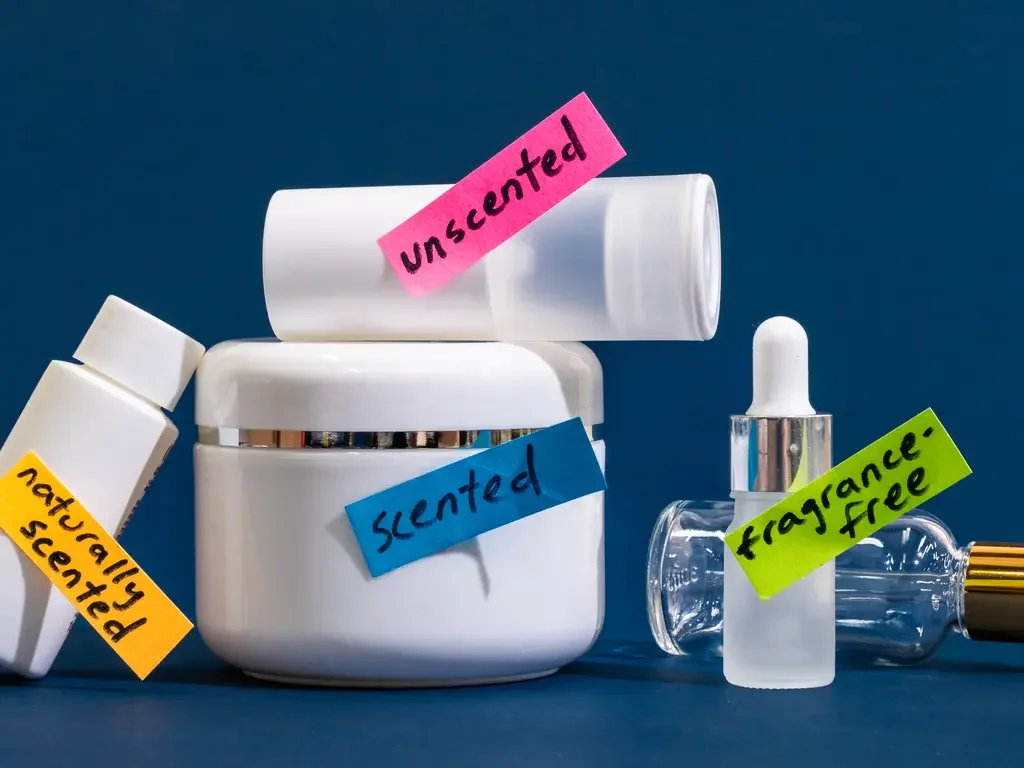
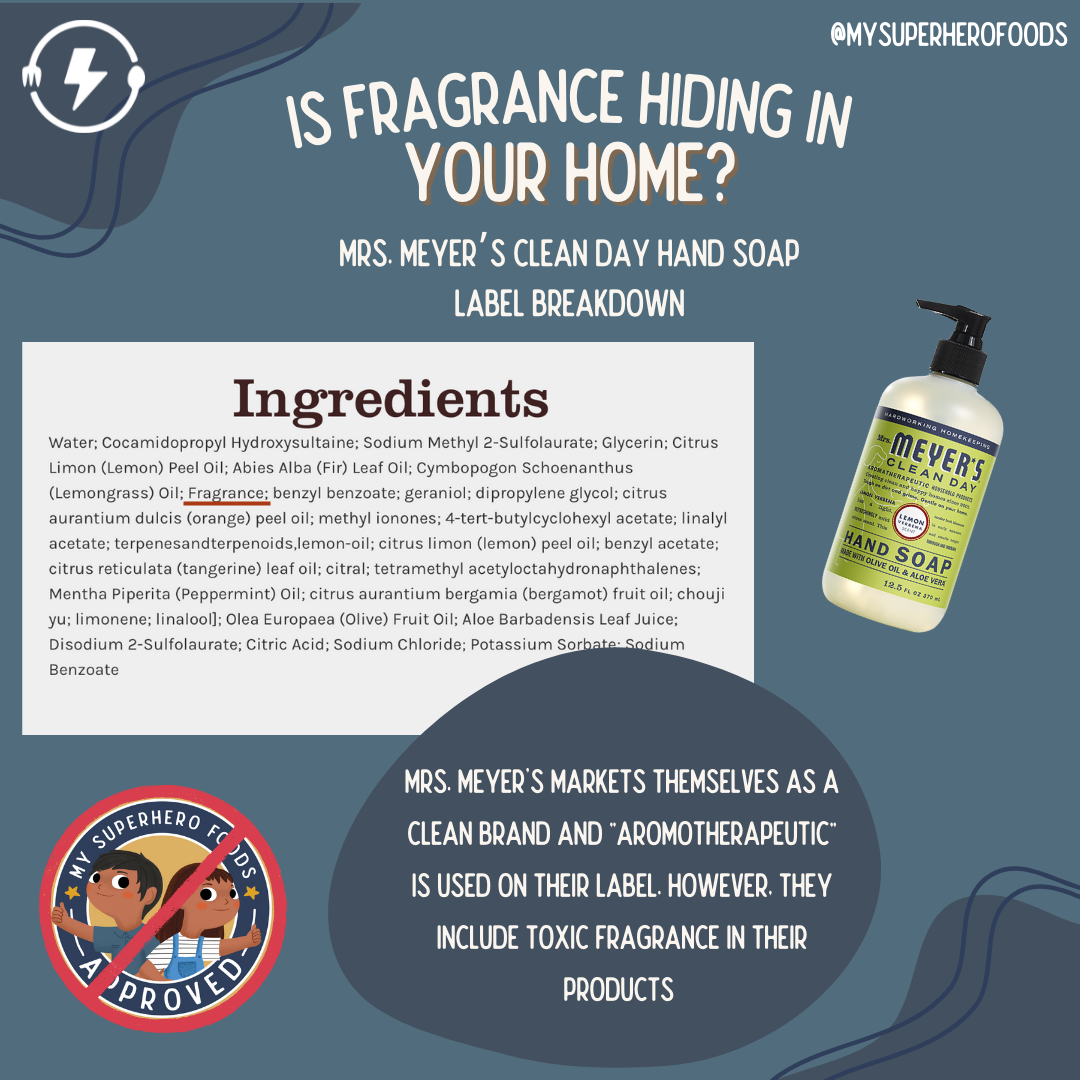
Almost all products are scented and include the ingredients "fragrance" or "parfum" unless they are specifically labeled "Fragrance-Free." Look for the words "Fragrance-Free" on the container. Laundry detergents and other cleaning products will also often have the label "Free and Clear" — — which usually means it is fragrance-free. Make sure it says “Free and Clear” of fragrances specifically, as some cleaning products will say “Free and Clear” and in smaller letters “of dyes”, and still include fragrance!
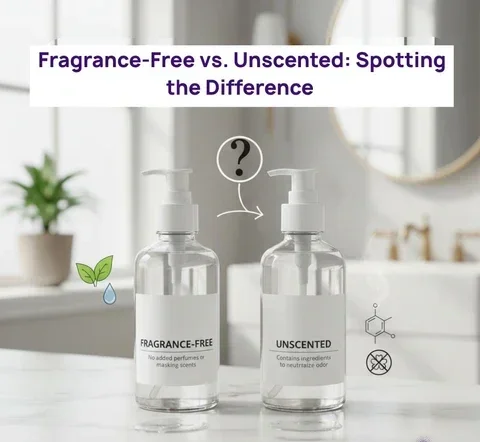
Labels That Are Misleading
Many products are marketed with terms that sound safe but do not guarantee the product is fragrance-free:
“Unscented” (often contain fragrance plus fragrance masking agents)
"Free and sensitive"
“Free and Clear (of dyes, etc.)”
“Pure and clear”
"Sensitive skin"
"Natural"
"Organic"
"Paraben and sulfate free"
“Plant derived fragrance/ingredients”
"Natural fragrances"
"Hypoallergenic"
"No artificial fragrances"
"No synthetic fragrances"
Some products will also say "fragrance*" and the asterisk will denote: " *plant derived fragrance, natural essential oil derived fragrance, or 100% natural fragrance." None of these labels can ensure that harmful chemical fragrances have not been included in the product as these labels are not regulated. If the word "fragrance" is used at all, even if described as "plant derived and natural", it is a no-go.
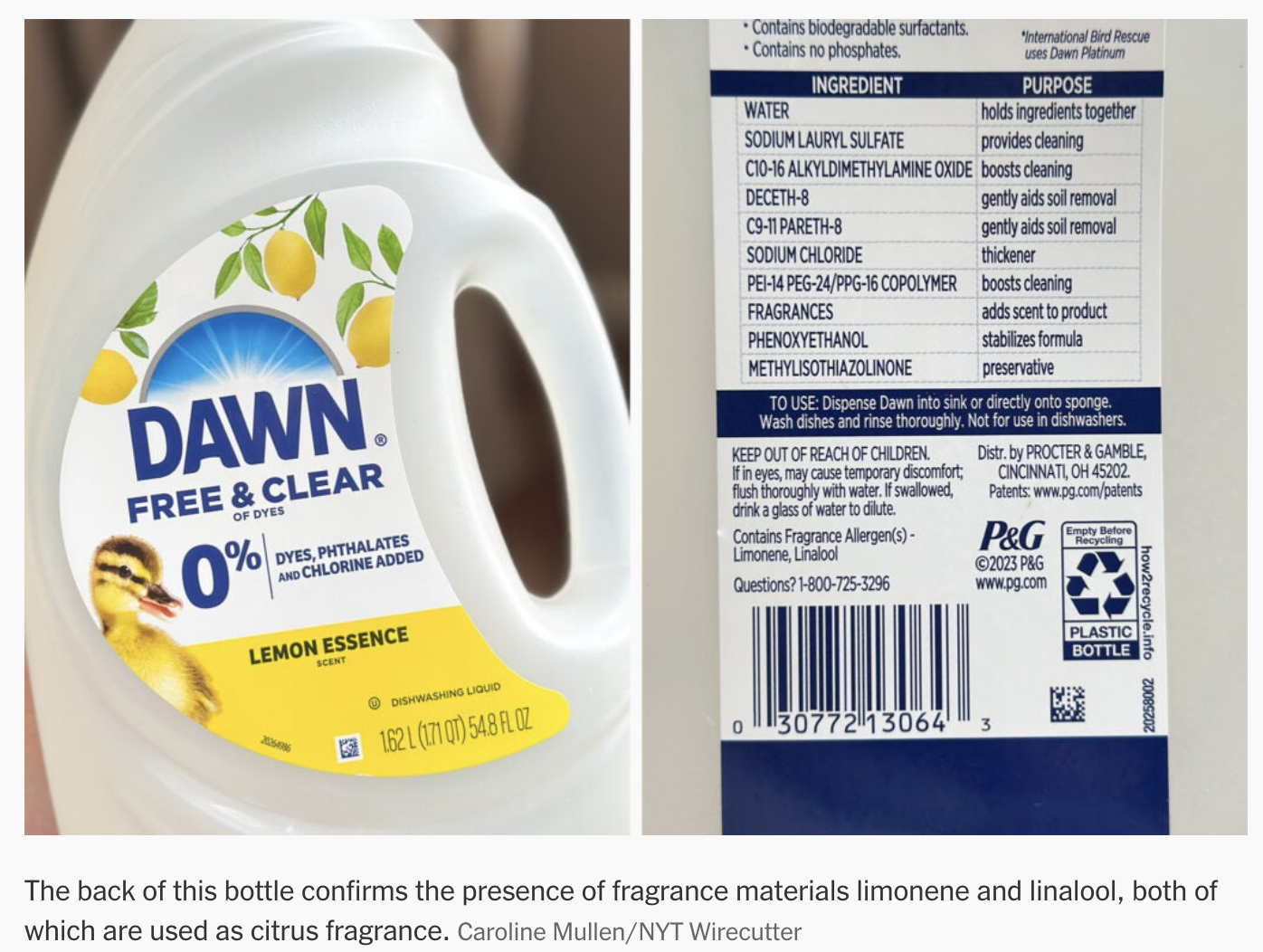
Fragrance-Free vs. Unscented: What's the Difference?
This is one of the most common and costly points of confusion, so it deserves its own section. The two terms are not interchangeable, and knowing the difference can save you from accidentally bringing fragranced products into the studio.
TermWhat It Actually MeansIs It Safe for This Space?"Fragrance-Free"The product contains no fragrance ingredients — no synthetic fragrances, no natural fragrances, no essential oils, no masking agents. The label is regulated and means exactly what it says.✅ Yes. This is what you're looking for."Unscented"The product may contain fragrance ingredients that have been combined with a second "masking" fragrance to neutralize the smell. The goal is to create a product with no perceptible scent, but the chemicals are still there.❌ No. "Unscented" often contains the same problematic chemicals as scented products.
Why This Matters
When a product is labeled "unscented," it often means the manufacturer has added fragrance chemicals to cover up the smell of other ingredients, then added a masking agent so you can't smell it. The result: a product that seems neutral but still contains the very chemicals we're trying to avoid — phthalates, synthetic musks, and other endocrine disruptors.
How to Shop Safely
Look for the exact phrase "Fragrance-Free" on the front of the package.
Check the ingredient list for any of these words: fragrance, parfum, perfume, aroma, scent, essential oil blend, natural fragrance.
If you see "unscented" but no "fragrance-free," put it back. It's not safe for this space.
A Quick Test
If you're unsure about a product you already own, try this: read the ingredient list. If you see any form of "fragrance" listed, it's not fragrance-free — even if the front of the bottle says "unscented," "natural," or "sensitive skin."
Bottom Line: "Fragrance-Free" is the only label you can trust. When in doubt, check the ingredients — and if you're still unsure, reach out to me and I'll help you figure it out.
Quick Rules to Remember
| LABEL | VERDICT |
|---|---|
| "Fragrance-Free" | ✅ Safe to use |
| "Free & Clear (laundry)" | ✅ Safe to use |
| "Unscented" | ⚠️ Often contains fragrance + masking fragrance — check ingredients for "fragrance" or "parfum" |
| "Natural," "Organic," "Hypoallergenic," "No Parabens or Sulfates" | ❌ Does NOT mean fragrance-free — check the label |
| "No Synthetic Fragrances" | ❌ Likely contains “natural” fragrance, which is unregulated and can still be harmful or essential oils — check ingredients for "fragrance" or "parfum" |
| "Natural Fragrance," "100% Natural Fragrance," "Plant-Derived Fragrance" | ❌ Still contains fragrance — not safe for this space |
| "Fragrance Oils" | ❌ Contains fragrance — not safe for this space |
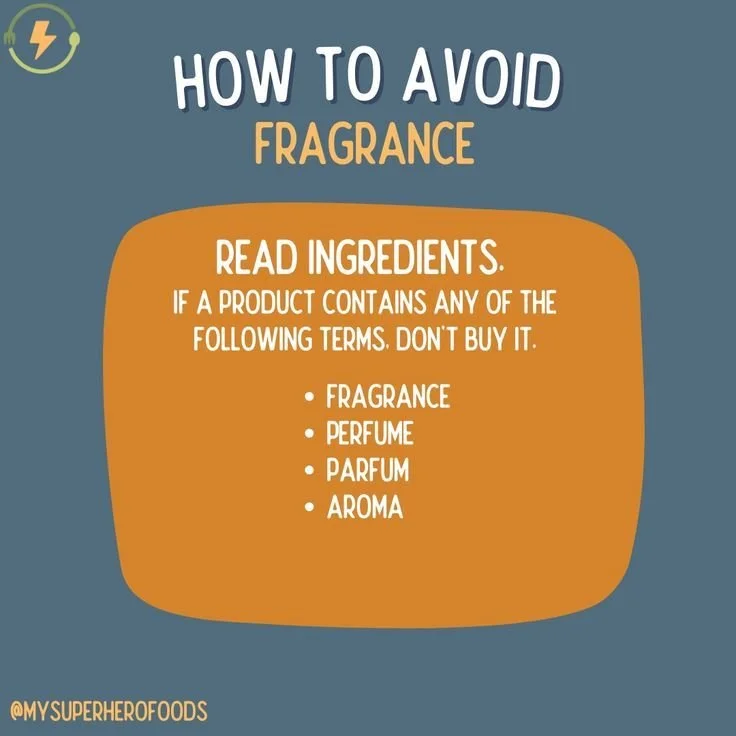
| Contains "fragrance," "parfum," "perfume," "aroma," or "scent" anywhere on the label | ❌ Not safe for this space |
How to Find Fragrance-Free Products
Once you know what to avoid, finding safe products is easier than you might think! I understand that switching can feel like a big adjustment, but you'll likely find that it's simpler than you expected.
Most stores carry fragrance-free options for all personal care and laundry products, and they can often be found for the same price you were paying before. Many more fragrance-free options for all kinds of products are available online.
I am here to help. If you would like to switch to a fragrance-free version of a product you currently use and would like support in finding an alternative that is the same price or less than what you currently use, let me know and I will personally help research an alternative for you. I can help you find options at your local stores, online, or within your budget. You don't have to figure this out alone.
Below are specific recommendations for deodorant, laundry, and other products — and I'm always adding to these lists as I discover new options. If you don't see what you're looking for here, just ask me!
Deodorant & Anti-Perspirant
There are many fragrance-free versions of deodorant and a handful of fragrance-free anti-perspirant options. If the label says "fragrance-free", you're good to go. If it says "unscented" — watch out! "Unscented" often means there are fragrance ingredients plus masking fragrance ingredients — so you still have to check the ingredients carefully for "fragrance" to see if the product is actually fragrance-free or not.
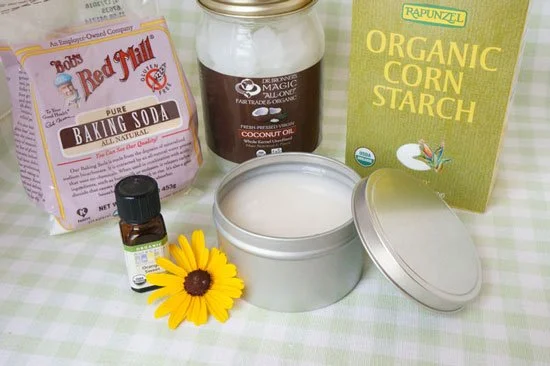
DIY homemade fragrance-free deodorant:
Coconut oil: Rub about ½ teaspoon into each armpit. It works all day and does not stain.
Baking soda + corn starch: Mix one part baking soda with one part corn starch. Apply by patting some under your arm.
All three combined: Combine all three ingredients in equal parts.
No deodorant and natural BO is totally fine with me, and I will take any day over chemical fragrance. Truly.
Where to buy:
Store
Options
Online
Wide selection of fragrance-free deodorants and anti-perspirants — search "fragrance-free deodorant." The "unscented" ones in my list have been double-checked and they are fragrance-free.
Target (Hadley location)
Several fragrance-free options available in-store. Note, Target carries many more There are more "unscented" ones but most of them actually have fragrance plus masking fragrance ingredients. The ones in this list though, based on the ingredients, should be actually fragrance free. ones available at Target but the ones not in my list were the types of "unscented" products that actually contain both fragrance and masking fragrance ingredients.
Walgreens (Northampton)
Contains fragrance (avoid): Secret Invisible Solid Antiperspirant And Deodorant Unscented, Secret Clear Gel Antiperspirant Deodorant for Women Unscented, Mitchum, Ban, Dry Idea. Actually fragrance-free: Crystal Mineral Deodorant Stick Unscented, Almay, Arm & Hammer Deodorant With Natural Deodorizers Unscented, Lume Women's Whole Body Deodorant Smooth Solid Stick Unscented, Crystal Mineral Enriched Deodorant Roll-On Unscented.
CVS
[INSERT INFO]
Whole Foods
[INSERT INFO]
Trader Joe's
Walmart
[INSERT INFO]
Walmart
Walmart Deodorant and Antiperspirant list
Fake unscented, DON’T buy: Sure Solid Anti-Perspirant Deodorant Stick, Unscented, Women, 2.6 oz
Real fragrance free: arm and hammer (in hadley, not northampton)
My Studio (409 Main St, Amherst)
I have a fun assortment of fragrance-free deodorant, anti-perspirant, laundry detergent, shampoo, and conditioner available at my studio at cost. You can arrange to come to the studio before your session to pick up products, or pick some up during your session.
Laundry Products
Detergent: Fragrance-free laundry detergent is now readily available for the same price as chemically fragranced detergent at any store you buy laundry detergent at. Look for the "free and clear" labels.
Dryer sheets and fabric softener have extra strong toxic chemicals that stick for a long time. It’s safest to stay away from them even if labeled ‘fragrance-free.’ Switch to using wool dryer balls.
Oxiclean and other laundry boosters: If you use Oxiclean, you can get a fragrance-free version — just check the label for "fragrance-free" or "free and clear." You can also easily make your own [INSERT HYPER LINK TO INSTRUCTIONS] with [INSERT ACTIVE INGREDIENTS] and baking soda.
If You Can’t Get Fragrance-Free Products Before Your First Session
* Note - we can try this out, but it may not work for future sessions if I can still detect residual fragrances. If that is the case, I will let you know and then we’ll discuss future options.
If you're not able to purchase fragrance-free products before your session — whether due to time, access, or financial strain — here's what you can do:
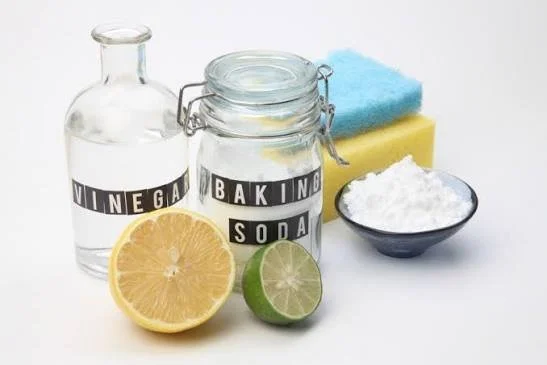
Laundry: Choose your outfit in advance. Wash it in plain water, or with white vinegar OR baking soda in place of detergent (don’t mix both as they cancel each other out), and then dry it without dryer sheets. Ideally, hang it up to dry and air out for a day or two.
Shower: Take a shower and try to wash off previously applied fragranced products (like shampoo and conditioner, deodorant, body lotion) as much as possible with a fragrance-free soap or body wash. If you don't have one, you can use one of these methods with ingredients you likely already have at home:
Oil — to help break down and remove fragrance residues. Good for removing perfumes (youtube video).
Baking soda — as a gentle scrub
Vinegar — as a rinse
Leave off optional fragranced products such as perfume, cologne, aftershave, lotion, hair styling product.
Deodorant: First, thoroughly wash off previously applied deodorant, ideally with fragrance-free soap if you have some. Then use one of the DIY homemade fragrance-free deodorant options above (coconut oil, baking soda + corn starch) or none at all.
_________________________
* Note - we can try this out, but it may not work for future sessions if I can still detect residual fragrances. If that is the case, I will let you know and then we’ll discuss future options.
And remember: If cost is the barrier, please talk to me. I will help you find affordable options — often for less than what you're currently paying. I'd rather have you here with natural body odor than not have you here at all. We can figure it out together.
Why Fragrance-Free?
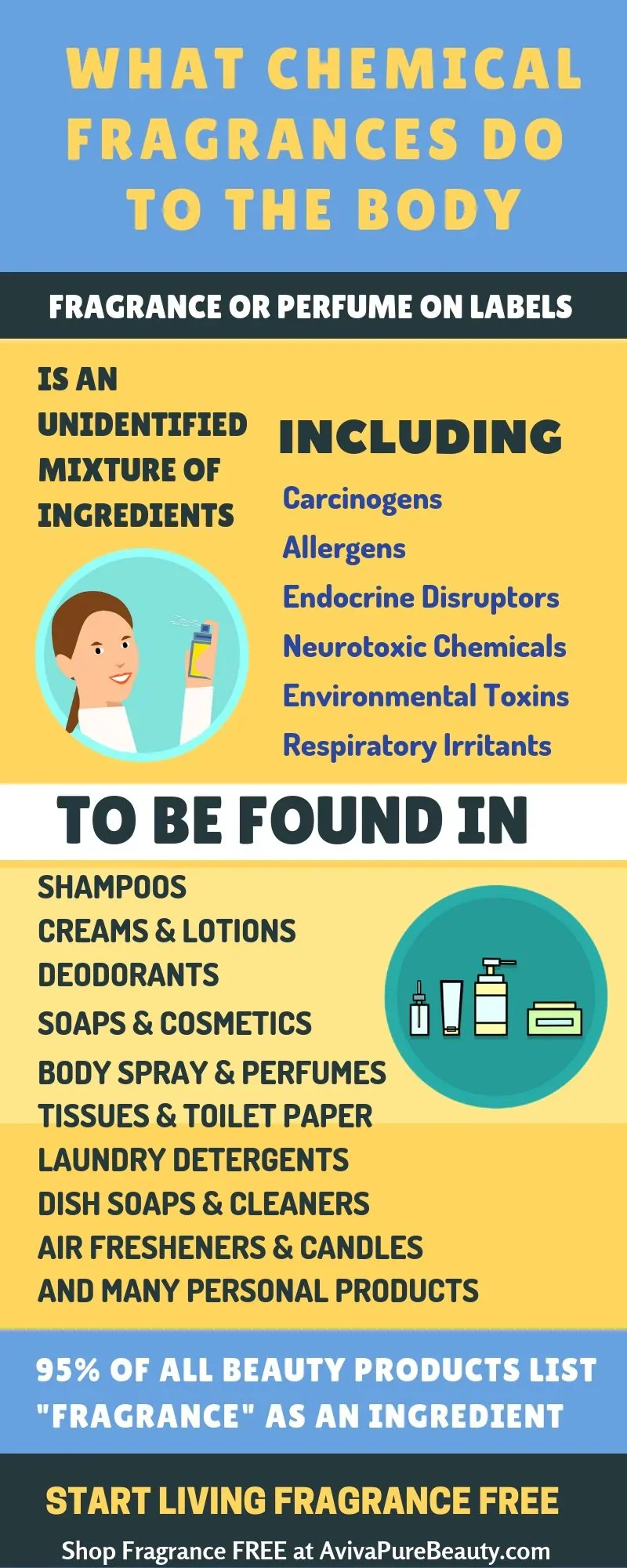
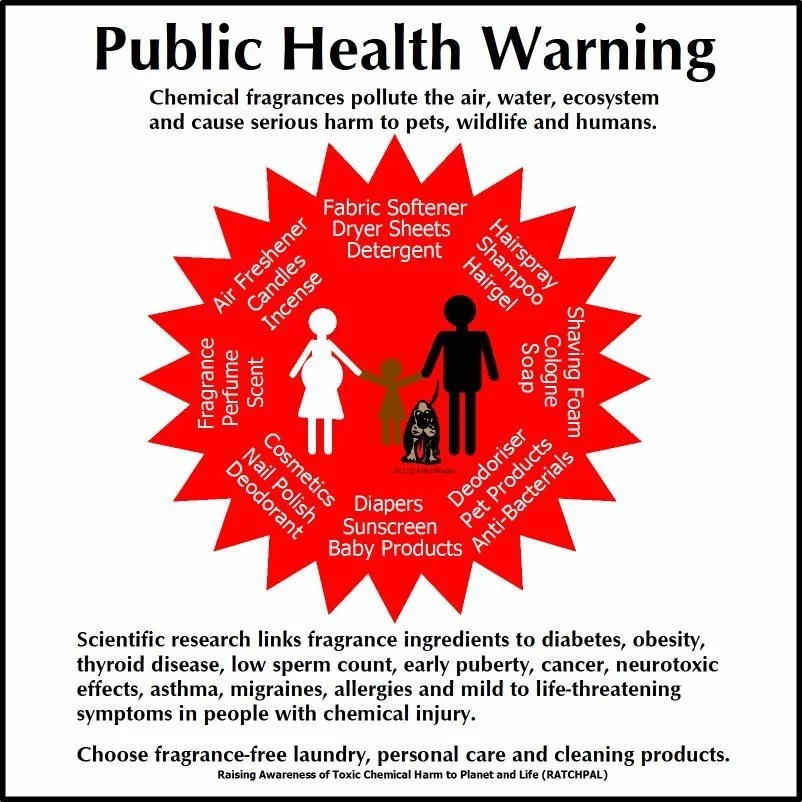
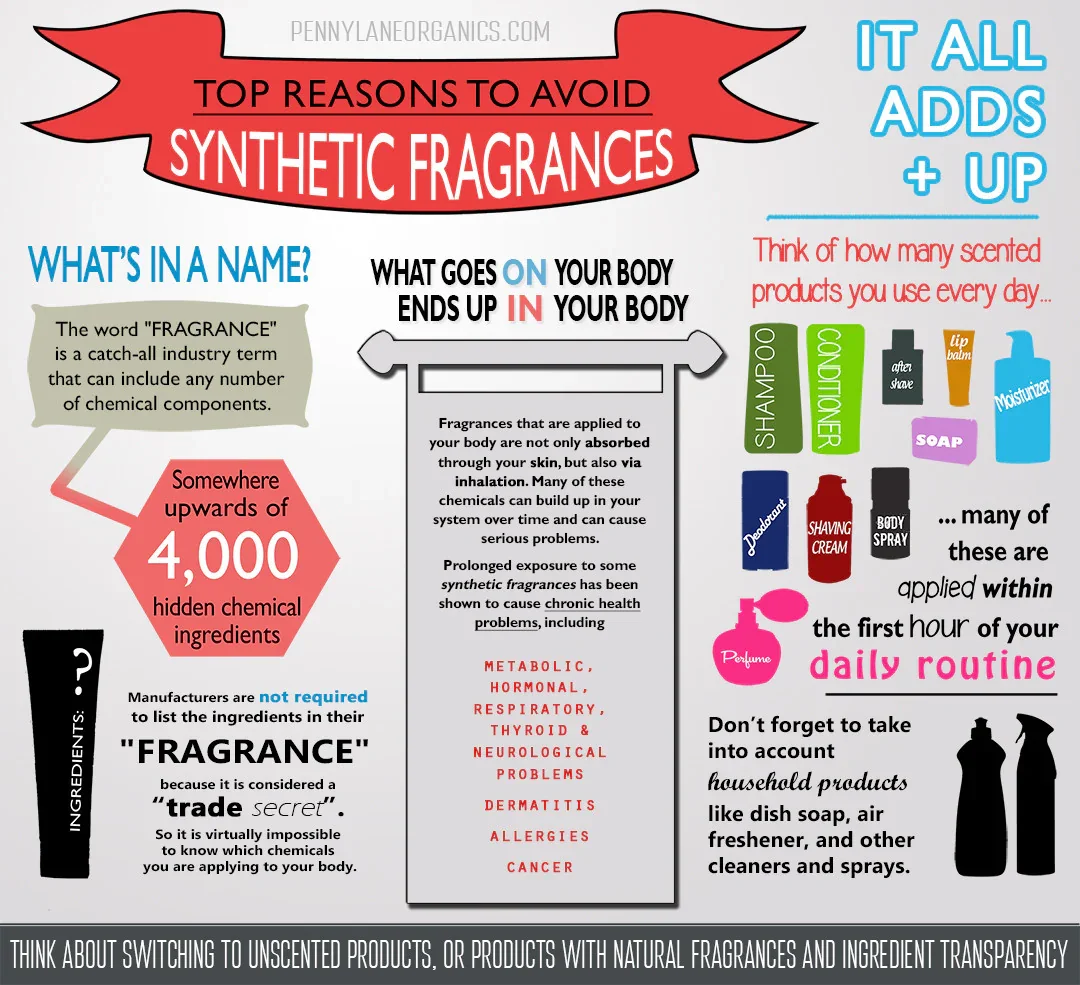
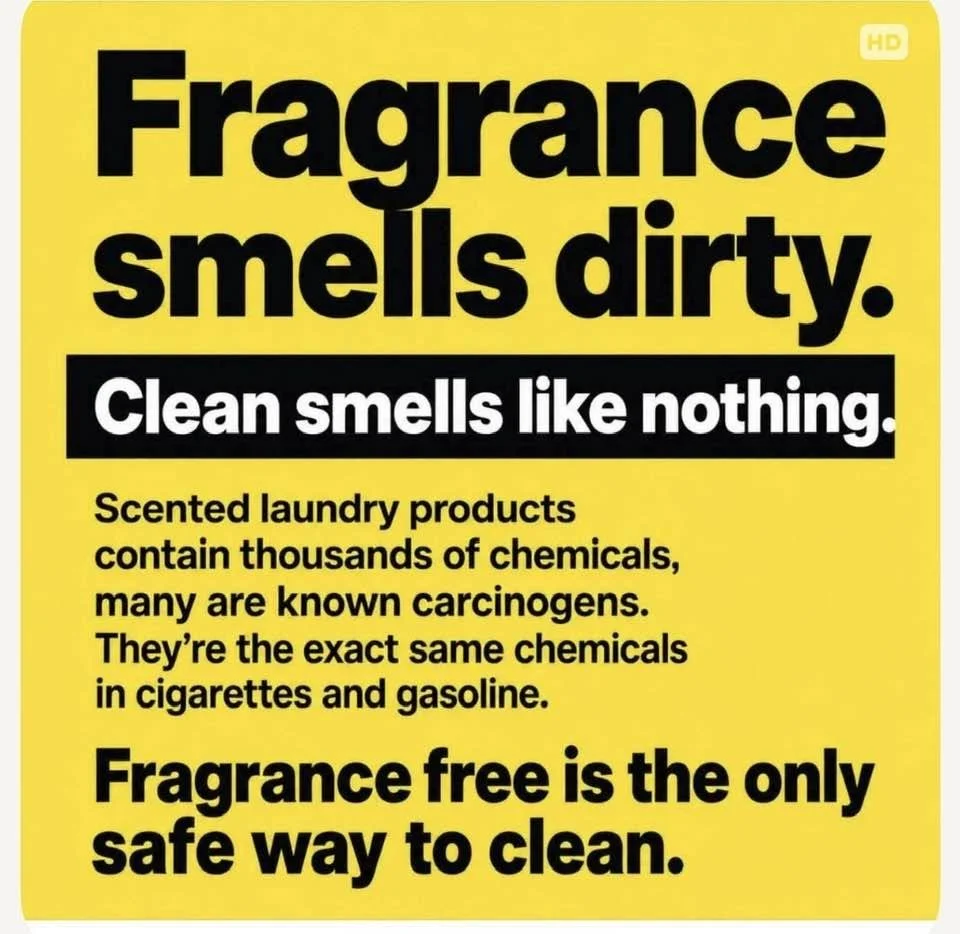
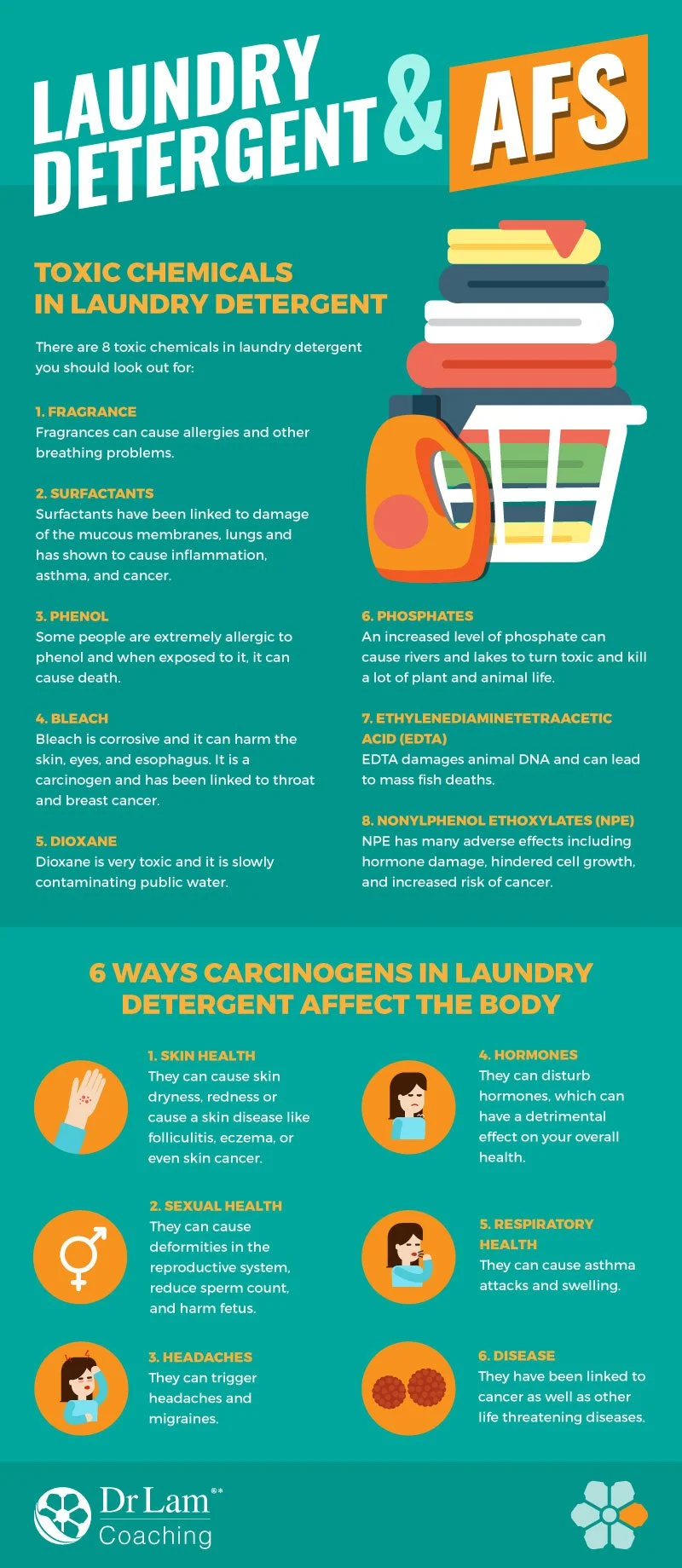
The unregulated chemicals hidden under the ingredient "fragrance" or "parfum" in personal care products are known to cause cancer, birth defects, hormone disruption, respiratory problems, and other adverse health effects. These chemicals impact everyone's health, whether they feel it or not. Some of us—including myself and many of my clients—have significant physical reactions and have come to understand that chemical fragrances are the cause.
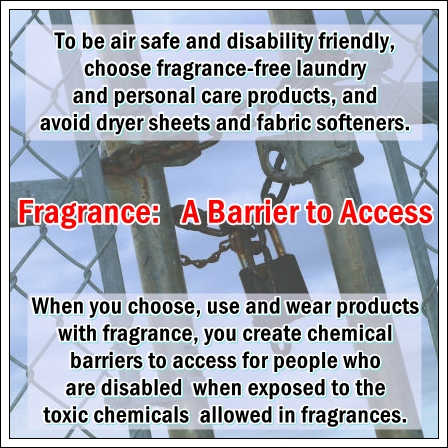
When these chemicals enter the air from fragranced personal care products they can be inhaled by others nearby and absorbed through the skin. These particles are tiny and can easily travel dozens of feet away from the person wearing the product. They can linger in the air and on surfaces for minutes, hours, or even weeks or months.
So while we've been taught to think that the personal care products we use are a personal choice that affects just ourselves, wearing fragrances actually affects everyone and every space we come into contact with.
That's why I'm asking you to help me keep this space fragrance-free—not just for me, but for everyone who walks through this door.
For me personally, exposure to these chemicals can trigger headaches — which makes it hard to be fully present and focused during your session. More fundamentally, these chemicals are known carcinogens and endocrine (hormone system) disruptors. I'm recovering from both stage 1 breast cancer and uterine fibroids (non-cancerous growths on the uterus — I had one grapefruit-sized fibroid and nine smaller ones!), both diagnosed soon after I turned 40 and treated within the last year.
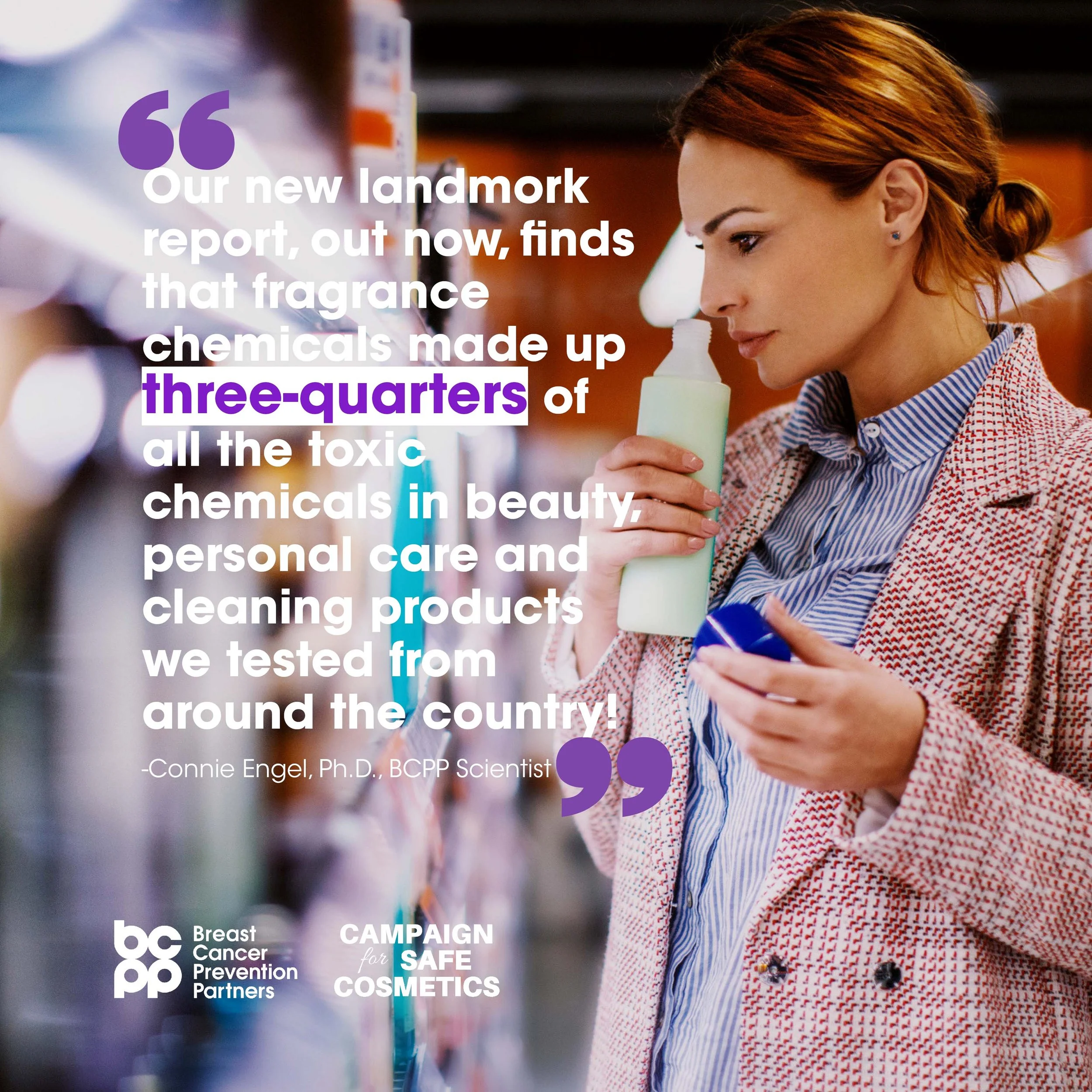
A 2023 study showed that multiple breast cancer biomarkers measurably decreased in breast cancer survivors after just one month of cutting out fragranced personal care products containing parabens and phthalates — which conversely proves that daily exposure to these products, even over the course of just one month, increases breast cancer biomarkers.
Since recurrence of both breast cancer and fibroids is common, reducing my exposure to these chemicals is one of the most important things I can do for my long-term health. I've done everything in my power to lower my own risk. But I can't control what people wear into this room — or what people wear out in the world. When so many people wear fragranced products, the exposures add up: a cafe or store I walk into, the gym, a talk or film screening I attend — even walking down the street 40 feet behind someone whose laundry, hair, or lotion products are so strong that the scent carries through the air and is impossible to escape — even outdoors.
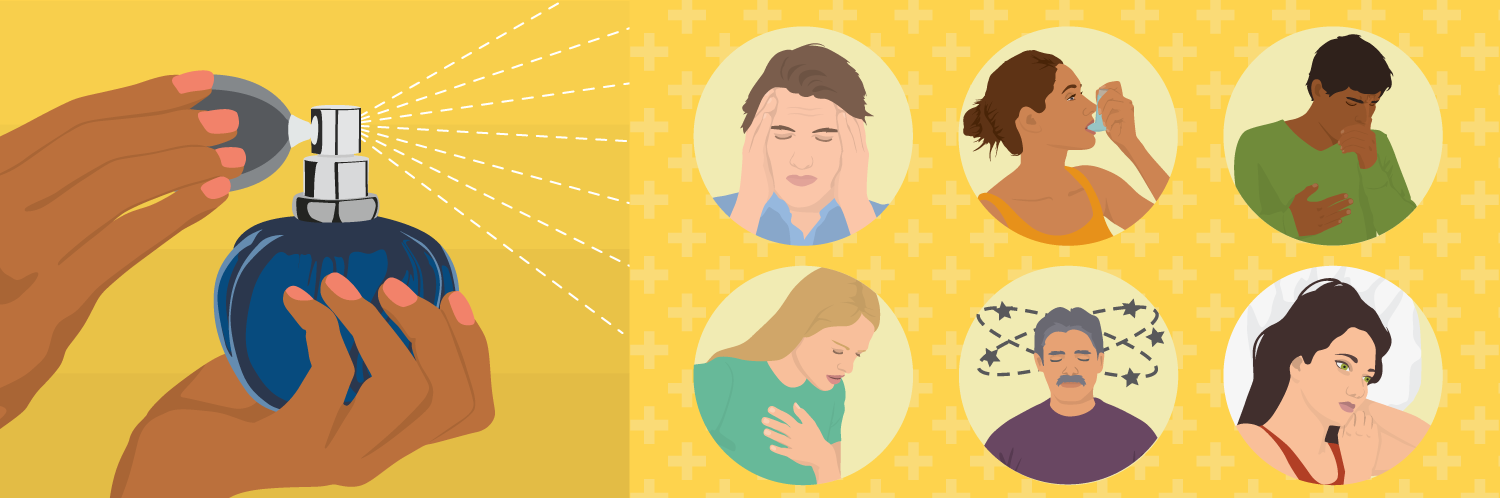
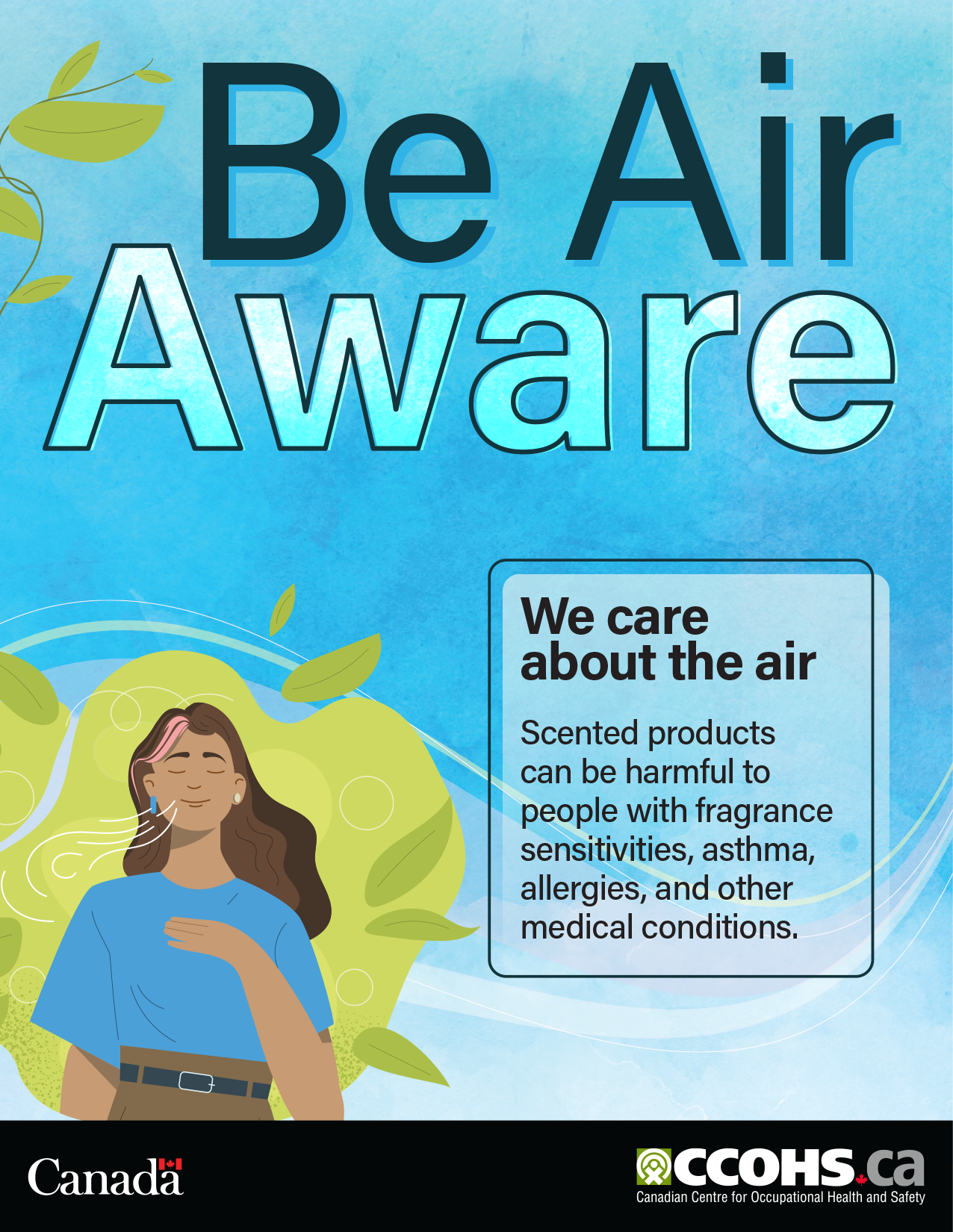
And for people with acute chemical sensitivities, a single exposure can mean hours or days of migraines, difficulty breathing, brain fog, or worse — all completely out of their control. Many of these people have to adapt their daily routines, outings, and even work, around minimizing exposure to chemical fragrances in other people’s personal care products and cleaning products.
So if you choose to go 100% fragrance-free, you will literally be helping reducing triggering people’s acute reactions to fragrances — like nausea, respiratory problems, brain fog, headaches and migraines, and sometimes even seizures — and you will also be helping reduce, instead of increase, the risk of recurrence or development of health issues like cancer, fibroids, endometriosis, thyroid disorders, Polyendocrine Metabolic Ovarian Syndrome (PMOS, formerly ‘PCOS’), and other endocrine disorders. Your choice matters — more than you might realize!
On top of all the reasons to go fragrance-free out of care for others, many people who make the switch discover that they'd been having reactions all along without even realizing it. Symptoms like brain fog, irritability, mood changes, headaches, fatigue, skin and throat irritation, respiratory issues, nausea, or difficulty concentrating can be directly linked to fragrance exposure — and when people eliminate fragrances from their lives, they often feel noticeably better. It's worth paying attention to how you feel before and after making the switch.
Making the Switch
Making this transition, if you are willing and able to do this, is truly an act of love and solidarity with the millions of people who navigate this world with chemical sensitivities, chronic illnesses, and conditions directly impacted by fragrance exposure.
When you choose to go fragrance-free, you are choosing to not risk harming, and instead protect:
The person with asthma who can't breathe in a scented room
The person with migraines who loses an entire day to a headache triggered by someone's laundry detergent
The person with cancer in active treatment trying to minimize exposure to carcinogens and other chemicals that will tax their already overworked immune system
The person with brain fog or irritability who doesn't realize it's caused by fragrance exposure
The person with endometriosis or PMOS (formerly PCOS) whose hormonal balance is already fragile
The person with thyroid disease whose system is easily thrown off by endocrine disruptors
The person with chemical sensitivity who can't enter public spaces without getting sick
Every time you choose a fragrance-free product, you are creating a safer world for all of these people — and for yourself, too. This isn't about giving something up. It's about choosing to care for others in a tangible, meaningful, and totally doable way.
Discount Structure
| Client Status | Price Per Session | Details |
|---|---|---|
| Standard Rate | $120 |
For clients who have not yet transitioned to fragrance-free products. *(You still need to arrive as fragrance-free as possible using the trial approach above — but you are not yet committing to 100% fragrance-free products between sessions.)* |
| 100% Fragrance-Free Client | $100 | You already use only fragrance-free products — OR you complete the switch to 100% fragrance-free before your session. This means every single product you put on your body or that touches your clothes is labeled "fragrance-free" — and you use them continuously, not just on session days. You never intermittently use any fragranced products, even between sessions. |
| Transition discount (first 3 sessions after switching) | $80 |
For clients newly switching to 100% fragrance-free — your first 3 sessions after completing the switch are discounted an extra $20 each = **$60 total saved** to put toward new products. This discount applies only when you commit to using fragrance-free products for every single product, continuously, going forward — without ever intermittently using fragranced products. |
How the Transition Discount Works
| Standard rate: | $120 |
| Fragrance-free discount: | -$20 |
| Transition discount: | -$20 (for 3 sessions only) |
| Your price for 3 sessions: | $80 each |
| Total savings over 3 sessions: | $60 |
Eligibility: You have fully stopped using all fragranced personal care and laundry products and are now using only 100% fragrance-free products for every single product you use — going forward, continuously, without ever intermittently using fragranced products, even between sessions.
When it applies: Starting with the very first session after your switch, and for the next two sessions after that (3 total).
💚 I Will Help You Find Affordable Options
If cost is the barrier to making this switch, please talk to me. I will personally help you find fragrance-free alternatives that fit your budget — often for less than what you're currently paying. I've done this for many people in my life, and I'm happy to do it for you. You don't have to figure this out alone.
💚 I'm Here to Help
I know that switching to fragrance-free products can feel overwhelming — new brands, new costs, new routines. I am here to support you through every step of this transition. If you're interested in switching but don't know where to start, or if you're worried about cost, please reach out. I will personally help you research affordable alternatives to the products you currently use — often for the same price or less than what you're already paying. You don't have to figure this out alone.
The Bottom Line
Strongly encouraged: Switch to 100% fragrance-free products permanently. It's the only guaranteed way to keep this space safe for everyone.
If you're not ready yet, you are welcome to try showering + skipping all leave-on products, and washing your outfit in plain water or vinegar and air-drying it — it might work!
If it doesn't work, we will see if we can fine-tune the approach — pinpointing which product's residue is lingering and switching that particular product to a fragrance-free version. If after multiple attempts we're still unable to eliminate the fragrance, you may need to transition to 100% fragrance-free using only products labeled "fragrance-free" going forward.
And if cost is the issue, please talk to me. I will help you find affordable options. I'd rather have you here than not.
When in doubt, leave it out — or reach out to me before your session.
Myths and Misconceptions
-
There are many products that use the above terms that still contain synthetic fragrances. Unless the product is specifically labeled "fragrance-free," it 99% of the time contains chemical fragrances, which you can confirm by reading the ingredient list. text goes here
-
Thousands of chemicals are hidden behind the ingredient "fragrance", and companies are not required to disclose what they are. Regardless of the name of the scent, if the product contains the ingredient "fragrance", "perfume", or "parfum", it likely contains chemicals that are known carcinogens, endocrine disruptors, and allergens.scription text goes here
-
The term "unscented" is often used on products where there are fragrance ingredients and then masking agents on top of the fragranced ingredients. So do not rely on "unscented" alone to find a fragrance-free product. Read the product label ingredients to ensure the word "fragrance" and "parfum" are not included at all.
-
Natural fragrances (essential oils, plant extracts) can still trigger severe reactions in sensitive individuals — including migraines, respiratory distress, and skin irritation. They are also unregulated and can contain allergens. For this space, all fragrances — natural or synthetic — are not permitted.
-
Each use of scented products/essential oils/vapes/etc. further deadens olfactory receptors, and many people experience odor habituation due to chemical saturation. People who are aware of their sensitivities to fragrances can often still smell the scents that you may not. Additionally, the negative health effects caused by fragrance chemicals (which are often carcinogenic and endocrine disrupting) affect anyone who is exposed to those chemicals through inhalation and skin absorption, regardless of the person wearing the product's ability to smell the chemical fragrance.
-
People who are aware of their sensitivity to fragrances more often than not will smell and be negatively impacted by any fragranced product, even if it is "just" someone's deodorant, or "just" someone's shampoo, or "just" someone's laundry detergent. The health impacts can be equally as serious, regardless of the type of scent, and regardless of the number of fragranced products someone is wearing, because even just one product that contains chemical fragrances will travel through the air and affect many people besides the person wearing the product. The particles in fragrances are especially small, which means the toxic chemicals can be inhaled, absorbed through the skin second hand, and remain in the air and on surfaces for hours, days, and even weeks and months.
-
Scented laundry detergent and other laundry products often contain some of the most toxic fragrance ingredients. They are often designed to linger for prolonged amounts of time. Oftentimes the synthetic fragrances in laundry products are hard to remove even after washing clothes with fragrance-free detergent and natural deodorizers. If you don't smell anything, it is likely from your olfactory receptors becoming desensitized over time. Fragrance-free laundry detergents are widely available in the same section as conventionally scented laundry detergent in any store, for the same price! Just look for "fragrance free" or "free and clear" on the label. Note that "sensitive skin" and "hypo-allergenic" does not guarantee that it will be fragrance-free.
-
Many people don't realize they're having reactions because the symptoms — brain fog, irritability, mood changes, fatigue, difficulty concentrating — can be subtle or mistaken for other things. When people switch to fragrance-free products, they often discover that symptoms they thought were "just how they are" actually clear up. You might not realize how fragrances are affecting you until you stop using them.
FAQ
-
It's a fair question — and one I used to ask myself before I understood how potent these chemicals are.
Here's the thing: fragrance chemicals are designed to be volatile — meaning they easily become airborne and travel through the air. They're also designed to stick to fabrics, skin, and hair. So even a "small amount" from one person's deodorant or laundry detergent doesn't stay small — it spreads into the air, settles on surfaces, and gets inhaled and absorbed through the skin by everyone in the room.
You may have become desensitized to the smell — our olfactory senses get dulled with repeated exposure — but that doesn't mean the chemicals aren't there. In fact, the same chemicals that make products smell good are also known to be carcinogens, endocrine disruptors, and neurotoxins.
And the research is clear: this isn't just about feeling uncomfortable. Medical studies have shown that exposure to fragranced personal care products on another person does have measurable negative health impacts. One study found that multiple breast cancer biomarkers went down after just 28 days of ceasing to use personal care products with phthalates, sulfates, and parabens — which "fragrance" almost always contains. Conversely, daily exposure increases those biomarkers.
So when people make the ask to be fragrance-free, it's not about being picky. It's about preventing measurable harm. goes here
-
Here's what happens: When you wear a fragranced product, the chemicals don't stay on your skin. They volatilize — they become airborne. These particles are tiny — small enough to travel dozens of feet and stay suspended in the air for hours. They also settle on surfaces, clothing, and hair, where they can persist for days, weeks, or even months.
So when you walk into a room, you're not just bringing your scent — you're bringing a cloud of airborne chemicals that everyone in that room inhales and absorbs through their skin. For many people, that cloud triggers immediate reactions: headaches, nausea, difficulty breathing, brain fog, irritability, and more. For others, the effects are cumulative — building up over time and contributing to chronic health conditions.
Medical studies have confirmed that these chemicals are absorbed through the air into the skin — so even if someone with sensitivities wore a mask, the exposure from people around them still negatively impacts them. This isn't about being sensitive — it's about basic chemistry and public health.
-
You're right — we can't avoid everything. And I'm not asking you to.
Here's the reality for me: I have already changed my diet. I have switched all my own personal care products to fragrance-free, paraben-free, and phthalate-free versions. I have reduced my exposure to environmental toxins wherever I can. I have done everything in my power to reduce my risk of cancer recurrence and fibroid regrowth.
And you know what? It hasn't felt overwhelming. It's actually felt empowering. I've taken control of what I can.
But here's the thing I cannot control: other people's fragrances.
When someone walks into a room wearing fragranced products, those chemicals travel through the air and enter my body through my skin and lungs. I don't get a choice in the matter. I can't "avoid" it the way I can avoid processed foods or choose organic produce. The only way I can avoid it is if other people choose not to wear fragrances.
And studies show that fragrance chemicals do increase cancer risk. The breast cancer biomarker study is powerful proof: just 28 days of switching to products without phthalates, sulfates, and parabens (which "fragrance" almost always contains) actually reversed cancer-associated biomarkers. That means reducing exposure to fragrances in personal care products actually has a big, measurable impact on cancer risk.
For me, now that I've changed everything else in my life, exposure to other people's fragrances feels like the bulk of what is upping my cancer recurrence risk. Without it, I actually feel like I'm doing really well. With it, I feel like all my hard work is being undermined by something completely out of my control.
I know I'm incredibly lucky that I don't have to deal with many other environmental exposures that other people face — and I hold deep compassion for those who do. But this one thing — fragrances — is actually in other people's control. It's something that people can choose to reduce, and it would make a huge difference for me and for so many others.
So when I ask you to be fragrance-free, I'm not asking you to avoid everything. I'm asking you to help me avoid the one thing that's still out of my control — and that you have the power to change.
More Info
Although 1 in 3 people reports having a chemical fragrance sensitivity, the truth is that fragranced chemicals negatively impact everyone's health—whether they notice it or not. These chemicals are linked to a wide range of illnesses and conditions, including cancer, endocrine disorders, neurological issues, heart disease, and respiratory problems. Consider how common these conditions have become:
Cancer: 1 in 3 people in the US will be diagnosed with some type of cancer in their lifetime
Uterine fibroids: Up to 70% of people with uteruses will develop fibroids by age 50
Endometriosis or PMOS (formerly PCOS): At least 1 in 10 people with uteruses will develop one of these by age 50
Breast cancer: 1 in 8 people with uteruses will be diagnosed in their lifetime
Thyroid disorders: 1 in 8 people with uteruses will be diagnosed in their lifetime
The chemicals hidden under the ingredient "fragrance" directly contribute to all of these conditions—and many more.
If you’d like to explore the science behind this, below are some of the key articles and medical studies that helped me understand the full toll fragrances take on our bodies.
Articles and Medical Studies
Article about the above study: Reducing breast cancer risk by reducing chemical exposures
Why Toxic Fragrance Chemicals are Secret , Safe Cosmetics
Do Synthetic Fragrances in Personal Care and Household Products Impact Indoor Air Quality and Pose Health Risks? - PMC by Rádis-Baptista, G. Do, Journal of Xenobiotics. 2023, 13, 121–131.
Air pollutants enter body through skin, Science News
Certain indoor air pollutants can be absorbed through the skin – here’s what you need to know, The Conversation
Makeup, fragrance and hair dye use in pregnancy leads to more PFAS in breast milk – study, The Guardian
Why smelling good could come with a cost to health | Fragrance, The Guardian
Evaluation of pollutants in perfumes, colognes and health effects on the consumer: a systematic review , Journal of Environmental Health Science and Engineering (2022)
Forever Chemicals in Perfumes and Colognes Linked to Cancer and Infertility, The Legal Journal
Expert Panel Confirms that Fragrance Ingredient Can Cause Cancer , Environmental Working Group
Fragrance , Breast Cancer Prevention Partners (BCPP)
Did You Know That ‘Unscented’ Isn’t the Same As ‘Fragrance-Free’?, Wirecutter, April 25, 2025
Thank You
Thank you for taking the time to read this, for considering your products, and for helping keep this space safe for everyone. Your effort means the world to me, to every client who walks through this door, and to so many others who you will cross paths with out in the world.
If you have any questions, concerns, or need help finding fragrance-free alternatives, please don't hesitate to reach out. I would be happy to support you every step of the way.